What You Need To Know About State Tax Exemption Certificates
Written by Melisha Daniels, Managing ConsultantNovember 20, 2021
In the ever-changing landscape that is Sales & Use Tax, there is one thing that remains the same. Sales or use tax should be charged on the sale or use of tangible personal property. Transactions involving the sale, use and sometimes lease or rental of items that you can feel, see, smell or touch are normally subject to Sales or Use tax, unless a specific exemption is prescribed by state law.
A Tax Exemption Certificate is a legal document provided by the buyer to the seller verifying the applicable exemption.
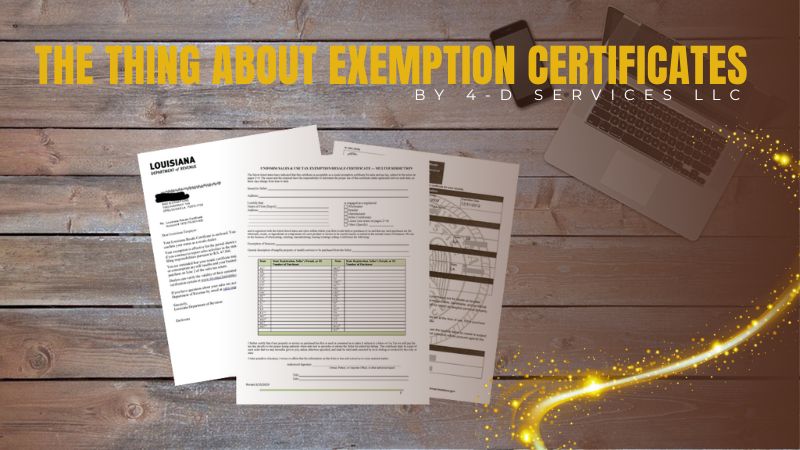
Currently, there are at least 48 states in the U.S. that impose a Sales Tax on the sale of taxable property or services. Each of these 48 states set forth laws or rules regarding qualified exemptions from tax. Although Multi-State Tax Exemption certificates exist, each of the 48 taxable states have their own individual Tax Exemption Certificate form. As well as, having individual rules regarding the Tax Exemption Certificate form use, time limit to exchange and record retention period. When a buyer claims an exemption from being charged sales tax, the state requires the buyer to provide and the seller to obtain and retain a valid, properly executed exemption certificate, according to each states law or rule.
The Seller's Responsibilities
One of the many responsibilities of selling product and services in a state is the responsibility to administer the states' Sales & Use tax. Sales tax administration is not limited to simply charging and collecting tax on taxable transactions. Administration of state and local sales & use tax laws includes obtaining a valid and properly executed Tax Exemption Certificate form when an exemption has been claimed. Several states even require the seller to verify the purchaser is eligible for the exemption that has been claimed. In addition, for audit purposes, the executed Tax Exemption Certificate forms must be retained for review.
The Buyer's Responsibilities
Although responsibility of charging and collecting tax on taxable sales or collecting exemption certificates in lieu of charging tax lies with the seller of the goods or services. The Buyer is responsible for providing a valid and properly executed, within a reasonable time frame of the transaction. With many taxing agencies requiring the buyer or person claiming the exemption to be properly registered to be able to claim an exemption. Buyer's must know which products qualify for exemptions, the necessary registration requirements to be able to claim the exemption and the appropriate certificate needed to claim the exemption.
What You Need to Know About Tax Exemption Certificates
Every business, buying or selling within the taxable states and territories within the United States, has a dog in the fight that is State Tax Exemption Certificates. Companies in the business of selling goods and services on a multi-state basis, must abide by the many rules set forth by each different state and local taxing agencies. For compliance purposes Sellers must be aware of each State's exemption rule or regulation and be able to recognize both products that are eligible for exemption, as well as customers who qualify for exemptions. While Buyers claiming an exemption from paying tax on taxable transactions need to be properly registered in the state and the correct form to provide to the seller.
May the odds be in your favor.