5 Key Sellers' Responsibilities for Tax Exemption Certificates
Written by Melisha Daniels, Managing ConsultantDecember 6, 2025
Sales & Use tax is imposed on the customer. However, it is the responsibility of the Seller to administer the tax. Administering the tax means collecting tax when tax is due and collecting documentation to substantiate claims for exemption for those instances when tax is not collected. Many times, the required substantiating documentation is a Tax Exemption Certificate.
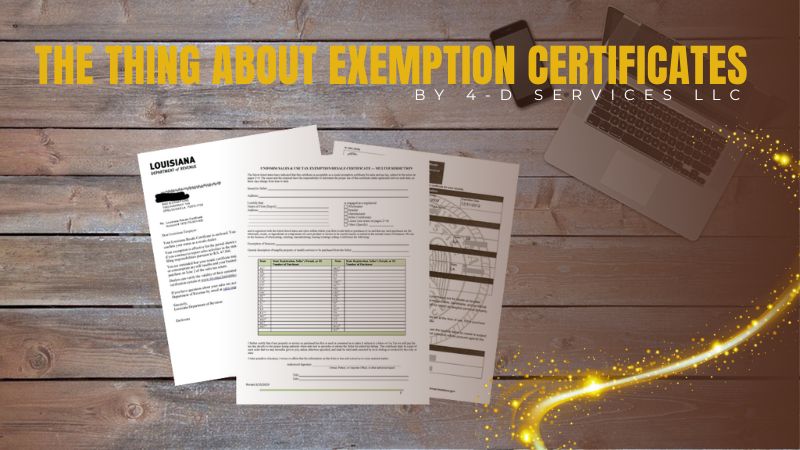
Like Sales & Use tax, the rules that govern tax exemption certificates vary from state to state. Understanding the Seller’s responsibilities regarding collecting and accepting tax exemption certificates is a critical part of effective Tax Administration.
5 Key Sellers' Responsibilities
Verifying the Exemption Certificates Validity
As with any legal document, a tax exemption certificate is valid if it has been properly completed and executed. The general rule is that sellers are required to accept a fully completed certificate in “Good Faith”. The Seller is responsible for examining the exemption certificate to ensure that all the required fields are filled out and the certificate has been signed and dated
Verifying the Purchaser Qualifies for the Exemption Claimed
Not only is the seller responsible for verifying the accuracy and completeness of the exemption certificate, but they must also verify the purchaser qualifies for the exemption claimed. For example, resale exemption transactions are items purchased to be resold in the regular course of business. As such a seller of sofas should question a resale exemption certificate provided from a purchaser listed as a telecommunications provider
Verifying the Exemption Certificate Covers the Purchase
In many states, the tax exemption certificate is specific to the type of transaction or type of industries. For instance, a resale exemption certificate may not be applicable for a claim for manufacturing exemption. The Seller is responsible for reviewing the exemption certificate type to make sure the certificate covers the transaction type.
Maintaining Accurate Records
The Seller is responsible for keeping copies of all exemption certificates they have collected. Proper record-keeping is crucial when it comes to tax administration and exemption certificates. In case of audit, the Seller will need the collected certificates to substantiate why tax was not collected on otherwise taxable transactions.
Staying Updated on Tax Laws
In this post-Wayfair ruling era, keeping abreast of ever-changing multi-state tax laws can seem like an Oxymoron. When laws regarding state tax exemptions change, changes are made to the exemption certificate form itself. It is the seller’s responsibility to stay current on legal updates that affect exemptions relevant to the industry and jurisdiction in which they operate.
Adhering to these 5 key responsibilities can help Sellers maintain compliance and minimize risk and exposure due to tax exemption certificates.